Stroud · Five Valleys · Cotswolds

Cotswold stone walls, built to last centuries

Traditional dry stone walling with local limestone and no cement. New walls, retaining walls and careful repairs.

Get a quoteSee the work
The craft

Stone on stone, the way the Cotswolds was built

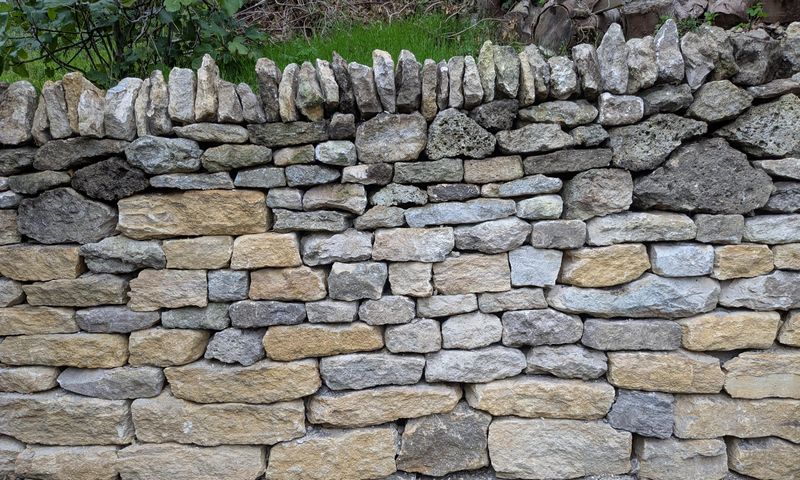
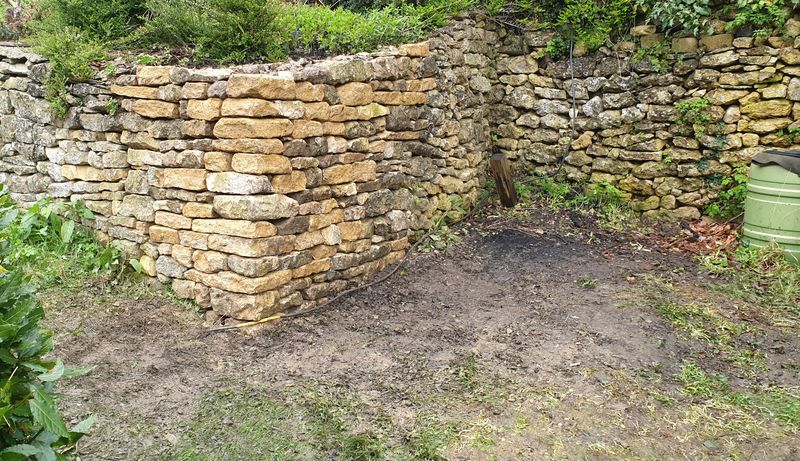
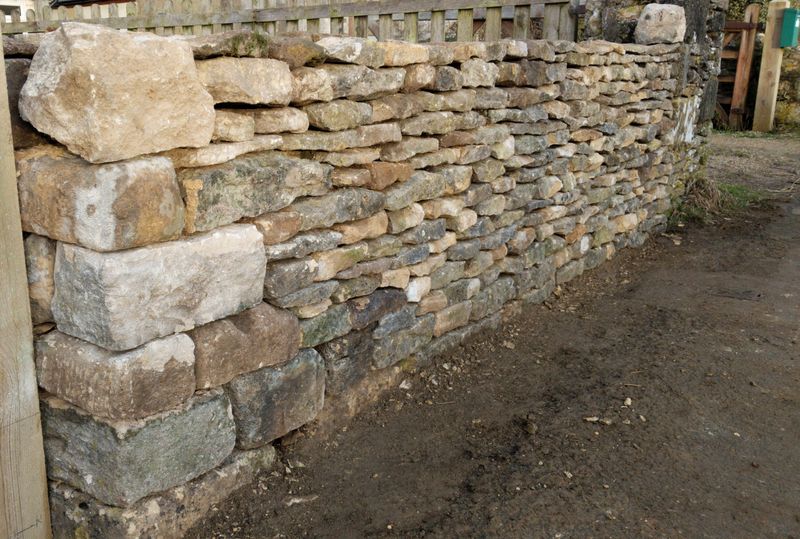
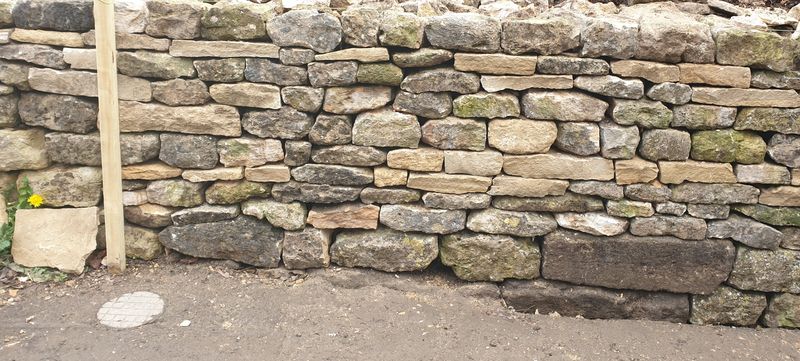
Most of the walls criss-crossing these hills went up in the 18th and 19th centuries, when the open downland was enclosed. They were built from the oolitic limestone underfoot, with no mortar, just good hearting, through stones and a tight cock-and-hen coping on top.

I build and repair walls the same way. I reuse the materials already on site wherever I can, and work with whatever local stone is available, so each wall keeps the character of its place rather than looking bought-in.
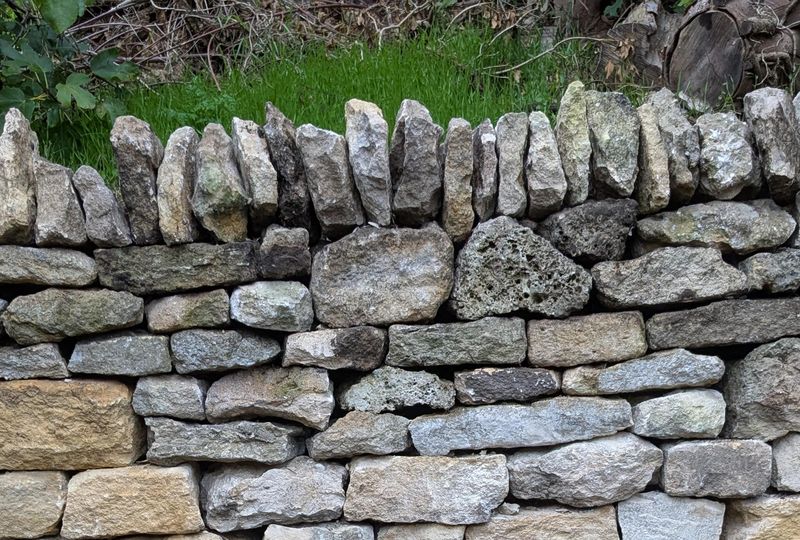
Close-up of cock-and-hen coping on a Cotswold dry stone wall
Services

What I do

New walls

Field walls, garden walls and boundaries in traditional Cotswold style, finished with cock-and-hen coping.

Retaining walls

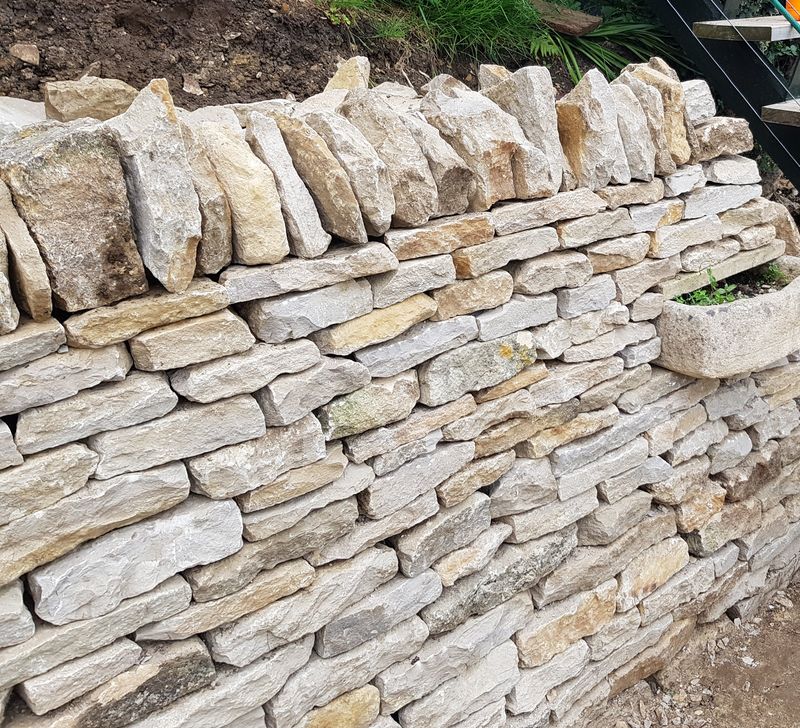
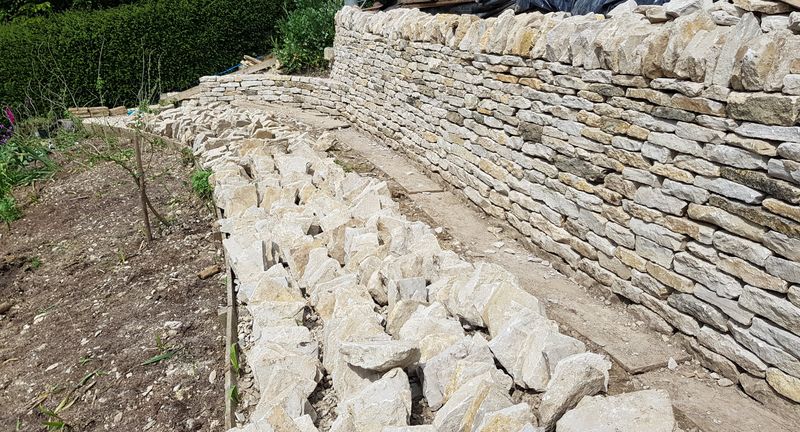
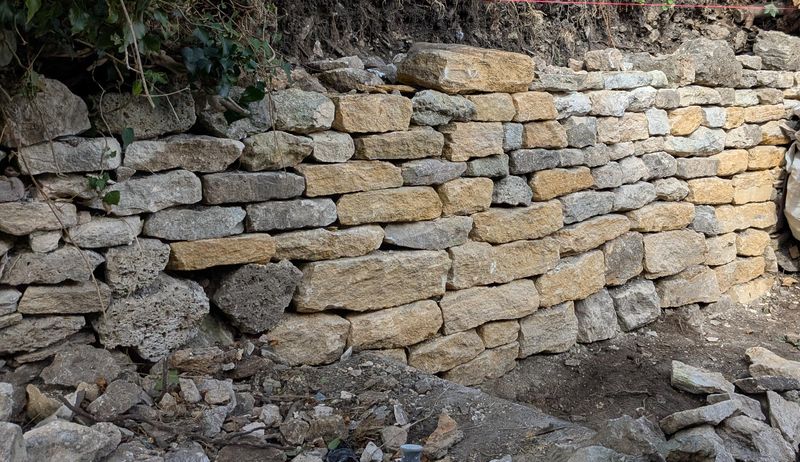
Terraces, banks and sloping gardens, built with proper batter and drainage to hold the ground for generations.

Repairs & rebuilds

Collapsed or bulging sections taken down and rebuilt, reusing the original stone wherever possible.

Insurance work

Vehicle damage, storm damage, fallen trees. Written quotes on headed paper for your insurer.

Piers & wall ends

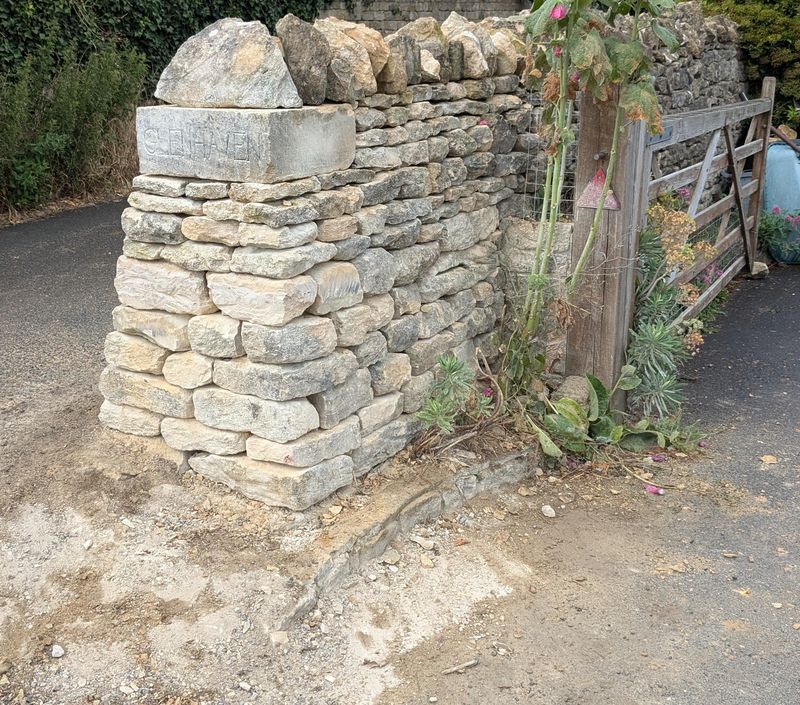
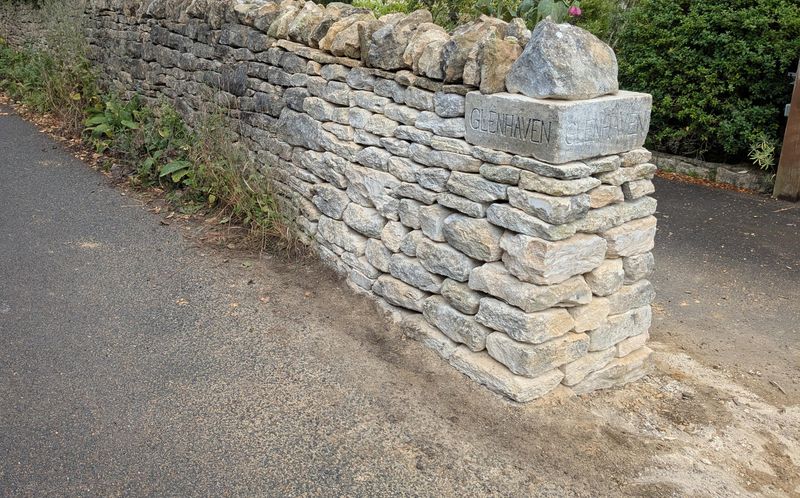
Gateway piers, wall heads and features built to take a gate or a house name.

Stone supply

Cotswold walling stone sourced and delivered for your job, including aged stone to match existing walls where suitable stone can be found.

Heritage & habitat

The heart of the wall

Wallers call the small stones packed into the middle of a wall the hearting. It's what holds a wall together, and the gaps between those stones are where the wildlife lives. A good dry stone wall is a piece of heritage and a habitat at the same time.

No cement

Dry stone walls use no mortar or concrete, avoiding one of the most carbon-heavy materials in building.

Reuse & local stone

Materials on site are reused first, topped up with stone from close to home. Very little energy goes into making or moving it, and the wall keeps its local distinctiveness.

Built for centuries

A well-built wall can stand for hundreds of years and is fully repairable. Nothing is thrown away, the same stones go back in.

A living wall

Limestone walls carry lichens, mosses, ferns and spleenworts, and shelter toads, newts, slow-worms, voles and wrens.

Low impact on site

Hand tools, minimal machinery and careful work around existing plants and roots.

Habitat features

Ask about bee and insect cavities, toad holes and planting pockets built into new walls.

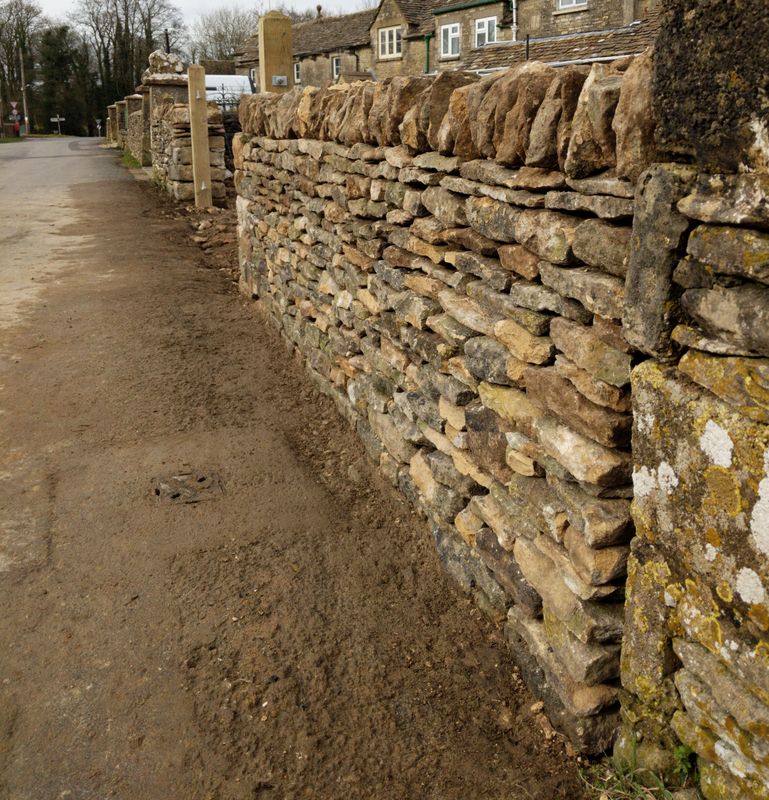
Rebuilt Cotswold stone wall and pier beside a lane, with hollyhocks
There are around 6,000 km of dry stone walls in the Cotswolds. Each one is a corridor for wildlife and a record of the people who built it.Keeping them standing is the job.
Get in touch

Need a wall built or mended?

Send a few photos and a rough idea of the size, and I'll come back with a price. Happy to provide written quotes for insurance claims.

hello@reubenforster.co.uk

Based in Horsley, near Stroud. Working across Stroud, Nailsworth, Minchinhampton, Chalford, the Five Valleys and the wider Cotswolds.